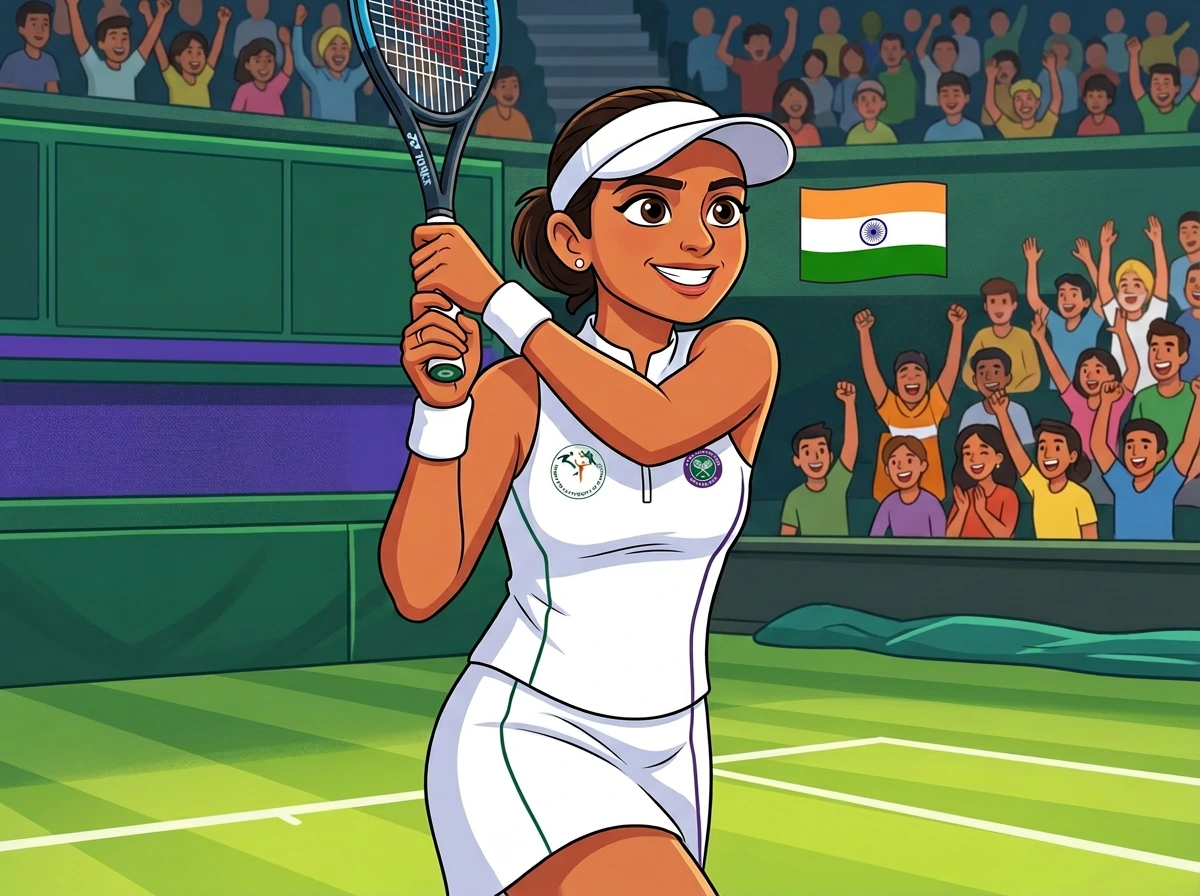
In a sporting culture that loves its superstars, Ankita Raina has built her career on something less glamorous but arguably more valuable: consistency. India’s most reliable women’s tennis player over the past several years, Raina doesn’t generate the headlines that come with Grand Slam runs or viral moments. Instead, she shows up, competes, and wins — week after week, tournament after tournament, year after year.
The Career Arc
Ankita Raina’s journey through professional tennis has been a masterclass in persistence. Without the early advantages that some of her international peers enjoyed — world-class coaching from childhood, unlimited financial backing, or the benefit of growing up in a tennis culture — Raina carved out a career through sheer determination and gradual improvement.
Her progression through the ITF rankings tells a story of steady, deliberate ascent. Starting at the lowest levels of professional tennis, she accumulated ranking points and experience in equal measure, each tournament adding another layer to her game and her understanding of what it takes to compete internationally.
The WTA rankings have been harder to crack, as they are for most players who don’t have the resources to play a full WTA schedule. But Raina’s peak ranking represented a genuine achievement — proof that an Indian woman could reach the upper echelons of professional tennis through the ITF pathway.
Playing Style
Raina’s game is built on reliability rather than raw power. Her groundstrokes are consistently deep and well-directed, keeping opponents pinned behind the baseline and creating openings that she exploits with changes of direction and pace.
Her forehand, while not the heaviest on tour, is placed with intelligence and consistency. She understands angles and geometry on a tennis court, using the full width and depth of the playing surface to move opponents around and create space for her next shot.
The backhand side is arguably her most dependable wing. Hit with a compact two-handed grip, it provides both defensive solidity and occasional offensive punch. Opponents who expect to dominate Raina’s backhand quickly learn that it gives nothing away cheaply.
Her serve has improved steadily throughout her career. While it doesn’t generate the pure pace of bigger hitters, its accuracy and variation — mixing placement, spin, and speed — make it effective enough to hold serve against most opponents at her competitive level.
Where Raina separates herself from many players at similar ranking levels is in her tactical intelligence. She reads the game well, anticipates opponents’ patterns, and adjusts her own tactics accordingly. This chess-like approach to tennis compensates for any physical disadvantages and makes her a difficult opponent for anyone who relies on a single game plan.
Billie Jean King Cup: The National Stage
If there’s one arena where Ankita Raina’s value becomes undeniable, it’s the Billie Jean King Cup (formerly Fed Cup). Representing India in the team competition, Raina has been the cornerstone of the squad for years — the player that captain and teammates alike know they can rely on when it matters most.
Team tennis demands qualities that individual competition doesn’t always test. The ability to perform under the pressure of national representation, to raise your level when a teammate needs support, and to maintain focus across multiple days of competition — these are the skills that make a great team player, and Raina possesses them in abundance.
Her Billie Jean King Cup record speaks for itself. Consistently delivering results in both singles and doubles, she has been instrumental in India’s campaigns at this level. The emotional investment she brings to representing her country is evident in her on-court demeanor during these ties — the intensity, the celebration, the will to win.
The Doubles Dimension
Raina’s doubles game has been an important complement to her singles career. Her natural court sense, reliable returns, and willingness to move forward make her an effective doubles player, and she has partnered successfully with several Indian players on the international circuit.
Doubles has also provided valuable ranking points and prize money — practical considerations that matter enormously for players who don’t have the luxury of a full WTA singles schedule. The ability to compete in both disciplines extends a player’s earning potential and competitive opportunities.
For Indian tennis, Raina’s doubles capability adds depth to the Billie Jean King Cup squad. A player who can contribute in both singles and doubles is invaluable in team competition, where squad size is limited and versatility is at a premium.
Role Model and Trailblazer
The significance of Ankita Raina’s career extends beyond her results. In a country where women’s tennis infrastructure has historically lagged behind the men’s game, Raina has shown what’s possible through talent and tenacity.
Every young Indian girl who picks up a tennis racket and dreams of competing internationally can look at Raina’s career and see a realistic pathway. Not a fairy tale of overnight success, but a genuine, achievable model: work hard, improve steadily, compete relentlessly, and build a career step by step.
This role model function shouldn’t be underestimated. Representation matters in sport, and Raina’s visible presence on the international circuit — representing India, winning matches, competing with dignity — sends a message to the next generation that Indian women belong in professional tennis.
The Challenges
Raina’s career also illustrates the challenges facing Indian tennis players, particularly women. The financial demands of touring professionally — coaching, travel, accommodation, training — are substantial, and Indian players often lack the sponsorship and federation support that their counterparts in richer tennis nations receive.
The limited number of professional tournaments in India means that Raina, like most Indian players, must travel extensively to compete. This adds cost and fatigue, creating a competitive disadvantage against players from countries with more robust domestic tournament calendars.
Despite these obstacles, Raina has maintained a professional career of remarkable longevity. Her ability to do so speaks to both her mental resilience and her genuine love of competition.
Legacy
When the history of Indian women’s tennis is written, Ankita Raina’s chapter will be defined by words like durability, reliability, and quiet excellence. She may not be the most decorated Indian woman to play professional tennis, but she has been one of the most important — bridging the gap between Sania Mirza’s era and the new generation led by players like Vaishnavi Adkar.
Her legacy is measured not just in wins and ranking points but in the path she has maintained for those who follow. By competing consistently at the international level for years, she has kept Indian women’s tennis visible and viable on the world stage.
That’s a contribution worth celebrating, even if it doesn’t come with the fireworks that the sporting world tends to reward.