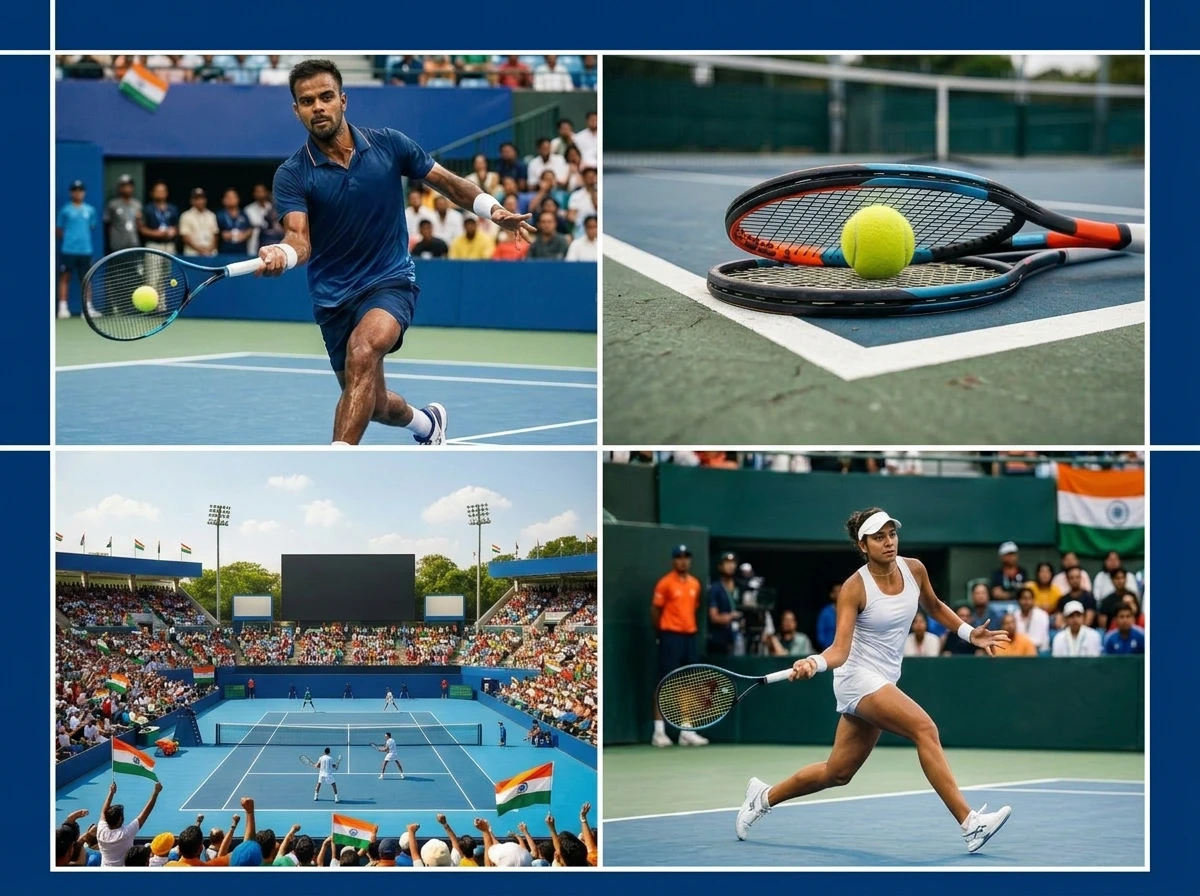
Indian tennis stands at a fascinating crossroads in 2026. The sport’s profile in the country has never been higher, driven by breakthrough performances on the ATP and WTA tours, a resurgent Davis Cup team, and a pipeline of junior talent that promises sustained competitiveness for years to come. This guide covers where Indian tennis stands right now and where it’s headed.
The Men’s Game: Sumit Nagal Leads the Charge
Sumit Nagal remains India’s highest-ranked men’s singles player and the face of Indian tennis on the ATP Tour. After his breakthrough 2024 season — which included a memorable run at the Australian Open and consistent results on the Challenger circuit — Nagal has consolidated his position inside the top 100.
His game, built around a punishing forehand and improved court movement, has matured significantly. Nagal’s ability to compete on hard courts at the tour level gives India something it hasn’t had since Somdev Devvarman’s peak years: a genuine singles threat at Grand Slams.
Behind Nagal, the men’s pipeline is developing. Sasikumar Mukund and Ramkumar Ramanathan continue to ply their trade on the Challenger circuit, picking up valuable ranking points and providing depth for Davis Cup selection. The emergence of younger players from the AITA development pathway suggests that Nagal won’t have to carry the burden alone for long.
Davis Cup: India’s Team Ambitions
India’s Davis Cup campaigns have been a source of national pride and occasional heartbreak. The tie against the Netherlands, scheduled for later this year, represents a significant test of India’s team depth. Davis Cup tennis demands a different mentality from individual tour play — the pressure of representing your country, the best-of-five format, and the home crowd all create a unique crucible.
India’s Davis Cup squad typically revolves around Nagal in singles, with the doubles pairing drawing from Rohan Bopanna’s vast experience (when available) and younger combination options. The team’s ability to compete with mid-tier tennis nations — and occasionally upset stronger ones — speaks to the fighting spirit that characterizes Indian tennis.
The Women’s Revolution
Perhaps the most exciting development in Indian tennis is the rapid rise of the women’s game. Where once Indian women’s tennis began and ended with Sania Mirza, 2026 sees multiple Indian women competing credibly on the international circuit.
Vaishnavi Adkar’s breakthrough at the W100 in Bengaluru signaled the arrival of a genuine talent. Her game — aggressive, confident, and increasingly polished — has drawn comparisons to the fearless ball-striking that defined Mirza’s early career. But Adkar is forging her own path, with a modern baseline game suited to today’s faster courts.
Ankita Raina continues to be the steady heartbeat of Indian women’s tennis. Her consistency on the ITF circuit, combined with her doubles prowess, makes her invaluable for Billie Jean King Cup ties. Raina’s longevity and professionalism set the standard for the younger players coming through.
Junior Tennis: The Future Is Bright
India’s junior tennis pipeline is producing talent at a rate not seen before. Maaya Rajeshwaran Iyer has emerged as one of the most exciting prospects in Asian junior tennis, with results at ITF Junior events that suggest a player capable of making the transition to professional tennis.
The depth of Indian junior tennis is arguably more impressive than any individual result. Multiple Indian juniors are now competing regularly at international events, gaining the experience and exposure that previous generations lacked. The AITA’s development programs, combined with private academies across the country, are creating a broader base of competitive players.
Tournament Landscape in India
India hosts a growing number of professional tennis events, from ATP Challengers to WTA and ITF tournaments. These events serve a dual purpose: they give Indian players the chance to compete at home and earn ranking points, and they raise the profile of tennis in cities across the country.
The Chennai Open’s legacy continues to influence Indian tennis culture, even as the tournament landscape has shifted. Bengaluru, Pune, and Mumbai have all emerged as important stops on the professional circuit. The hope is that India will eventually attract a full ATP 250 or WTA event back to the calendar, giving Indian fans regular access to top-level tennis.
What to Watch in 2026
Several storylines will define Indian tennis this year:
- Nagal’s ranking push — Can he establish himself firmly in the top 75 and secure direct entry to all four Grand Slams?
- Adkar’s development — Will her W100 breakthrough translate into consistent WTA-level results?
- Davis Cup — India’s ties this year will test the team’s depth and ambition.
- Junior Grand Slams — Watch for Indian juniors at Roland Garros and Wimbledon, where the pathway to professional tennis becomes visible.
- Domestic tournaments — The quality and quantity of professional events hosted in India continues to grow, benefiting players and fans alike.
The Bigger Picture
Indian tennis is no longer a one-player story. The breadth of talent across men’s, women’s, and junior categories represents a genuine sporting ecosystem. The challenge now is sustaining this momentum — through better coaching infrastructure, more competitive opportunities, and the kind of institutional support that turns promising juniors into established professionals.
For fans, it’s an exciting time. There are more Indian players worth following, more tournaments to watch, and more reasons to believe that the best days of Indian tennis may still be ahead.